National Clean Air Research Event 2025
Published:
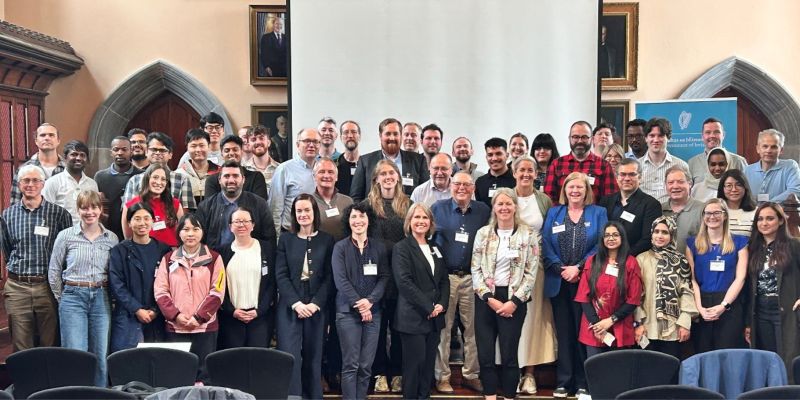
In May 2025, I had the opportunity to attend a research event focused on air quality and atmospheric processes in Ireland. Recently, I noticed a photo from that event shared publicly, which reminded me of the impact it had on my perspective. The discussions on atmospheric chemistry were particularly insightful. The detailed explanations of the chemical reactions that drive the formation of air pollutants — including precursor emissions, secondary pollutant formation, and transformation mechanisms — provided a deeper systems-level understanding of how air quality challenges evolve over time rather than appearing as isolated measurements. The experimental work presented at University College Cork was especially valuable. The laboratory simulations designed to replicate atmospheric conditions demonstrated how controlled chamber experiments can reveal reaction pathways, pollutant formation rates, and sensitivity to environmental variables. Seeing how theory, instrumentation, and controlled experimentation integrate into operational monitoring frameworks reinforced the importance of combining modeling with physical validation. Beyond the technical depth, the event highlighted the broader societal dimension of air quality research in Ireland. The presented studies addressed real challenges facing communities — from urban exposure patterns to policy-relevant thresholds — while also showcasing ongoing innovation in sensing technologies, data integration, and predictive modeling. The experience expanded my understanding of how atmospheric science, engineering, and public health intersect in the Irish context. It was a meaningful reminder that effective environmental monitoring requires not only advanced algorithms, but also strong experimental foundations and community-centered research. I would like to thank David Kelleghan for guiding me to attend this event, and Lero and hashtag#SyMeCo for giving me the opportunity to expand my knowledge and research in such venues.